
LISA NELSON RAABE
Bradley University’s Heuser and Hartmann galleries host a fall exhibition that showcases innovative art forms. Curator Marcella Hackbardt, inspired by the concept of play, invited nine artists from diverse backgrounds across the country to present a variety of artworks, including digital photography, painting, collage, and 3-D printed objects. Each artist explores the intersections between reality and fantasy through their unique creative processes, resulting in visual expressions, profound understandings, and transformations of self and identity.
We often associate play with childhood activities, such as creating with sticks and mud, dressing up, and exploring our senses through sight, touch, and taste. These pursuits, integral to childhood, continue to be a part of our lives, especially when we actively seek out the inventive in unexpected experiences, awe-inspiring sights, and the extraordinary.
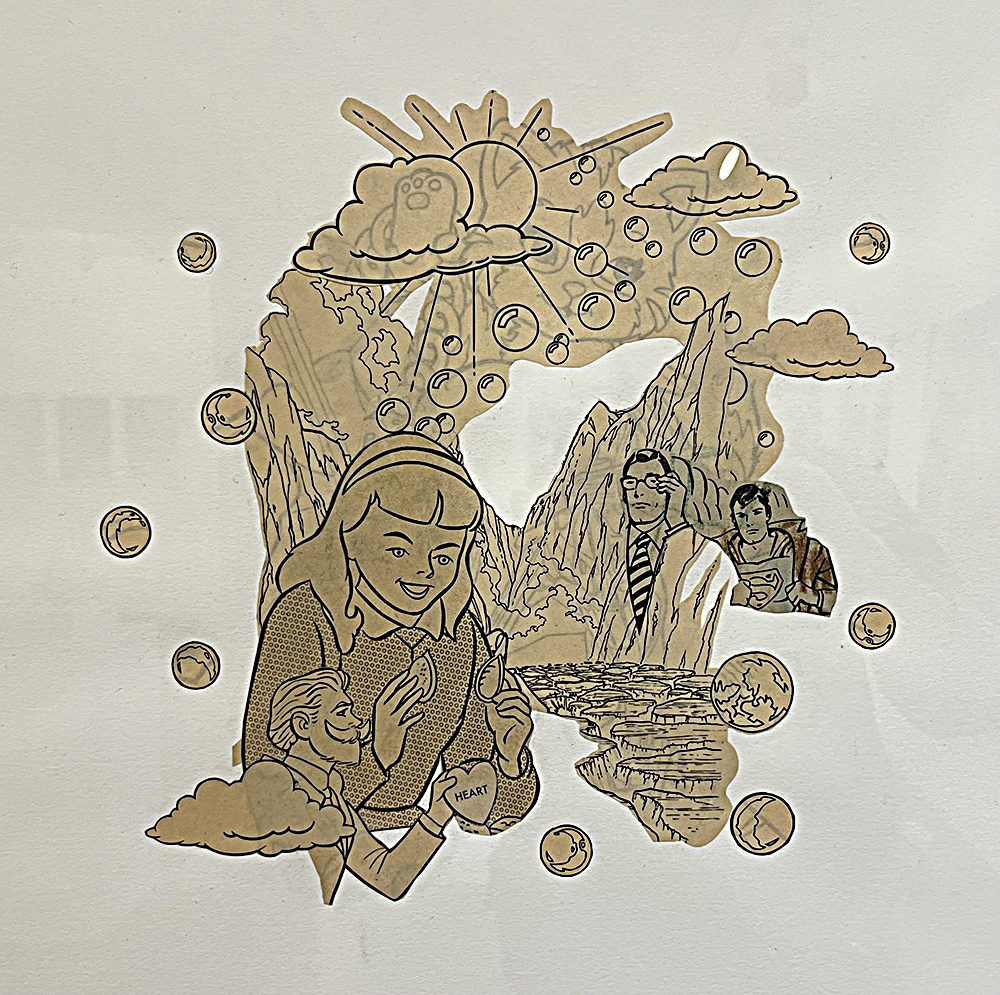
Craig Hill’s combines childhood coloring books.
LISA NELSON RAABE
Susanne Nestory, Bradley’s gallery coordinator, collaborated with Hackbardt, professor of art at Kenyon College in Gambier, Ohio. The exhibition is filled with lush and sensual imagery and objects, featuring intricate patterns, strange shapes, and the human figure in various forms, including traditional portraiture, mythological references, and childhood cartoon characters. Just as memories often evoke emotions rather than rational thought, the pieces in this show offer a unique and intimate experience of the unimaginable and incomprehensible, yet fully present and accessible.
Stephanie Rond’s detailed collages and paintings explore monumental architecture and the individual in the urban environment. Craig Hill’s collages combine coloring books from his childhood, creating an interplay between gender, violence, and entertainment. Figures from superheroes to religious and everyday family members float in atmospheric realms, evoking a sense of wonder and awe.
Erin Holscher Almazan’s work delves into the female form, incorporating mythical shapeshifting between humans and animals. Leonard Suryajaya, of Chinese descent, grew up in Indonesia and creates lavishly detailed, large-format photographs of family portraits, presenting out-of-context familial relationships. Kefa Memeh, a Los Angeles-based artist, features her own image adorned with intricate patterns from Ankara wax prints.
Gracelee Lawrence’s 3-D printed sculpture combines physical and digital methods to create bulbous, sophisticatedly colored shapes that resemble both human and vegetal forms. All the objects are printed using polyactic acid (PLA) filament — a vegetable-derived bioplastic most commonly derived from fermented GMO corn starch — emphasizing the connection between material and form.
Emily Joy Zeller employs Artificial Intelligence-assisted investigations to create intimate videos of changing forms. She asks AI to integrate animal, plant, and mineral subjects that transition and materialize like a blurred edge of flight being turned inside out.

Los Angeles artist Kefa Memeh uses her own image adorned with intricate patterns from Ankara wax prints.
LISA NELSON RAABE
The physicality of the works presented — some solid in form and image, others temporary presentations akin to wall vinyl signage — challenges our conventional understanding of fine art and its limited role in commerce. Visiting an art gallery may seem inaccessible, but it could also be a room filled with leftovers as an artist lets her imagination soar, experimenting and discovering the extraordinary. When we open ourselves up to that, just as we did as children in play, we can find something internal reflected, a fleeting moment to dream, find, remember, and rejoice.
Bradley University Galleries through Oct. 3.