
MIKE MILLER
When I was first invited to contribute to The Community Word more than a decade ago, I found myself pondering a simple yet profound question: “What kind of writer am I going to be?” The answer, as it turned out, was shaped by my passion for local botany and the legacy of a remarkable naturalist whose work I encountered during my research into historic plant records for Peoria County. The name of my column, “Nature Rambles,” is a tribute to this inspiration.
Virginius Huber Chase was a true “old-school” naturalist. Though best known for his botany work, Chase’s curiosity led him to become an avid ornithologist, archaeologist, entomologist, and even an oologist — one who studies bird eggs. Entirely self-taught, Chase corresponded with leading scientists, devoured books and journals, and, most importantly, spent every available hour outdoors, immersed in nature. His passion extended beyond scientific pursuits; he was dedicated to sharing science with the public. From 1933 to 1936, Chase wrote a weekly column for the Peoria Star newspaper called “Nature Rambles,” guiding readers through the hills, hollows, and prairie remnants of central Illinois. This spirit of accessible, descriptive nature writing is what I strive to emulate in my own column.
Chase’s roots run deep in Illinois. Born on Jan. 8, 1876, in Stark County, he was the great-grandson of Philander Chase, the first Episcopal Bishop of Ohio and founder of Kenyon College, and later the first Bishop of Illinois and founder of Jubilee College. The family’s farmland was near the Stark County village of Wady Petra, a name chosen by Chase’s grandfather to promote their stone quarry. “Wady” is Arabic for valley, and “Petra” is Greek for stone — together, a unique name for a station that would serve the quarry and the community. This blend of linguistic and local history is emblematic of the Chase family’s legacy.
As a child, Virginius Chase attended a local school east of Wady Petra. His daily walks to and from school became cherished opportunities to explore the creeks and prairie remnants. He was especially captivated by a small wet-prairie remnant near the school, untouched by plow or disturbance — a relic of the ancient prairie that once stretched across the region. Chase described this oasis as a place where “Small White Lady Slipper Orchids [grew] by the hundreds, Shooting Star by the millions, and Speckled Phlox by the acre.” These formative experiences fueled his lifelong passion for the natural world.
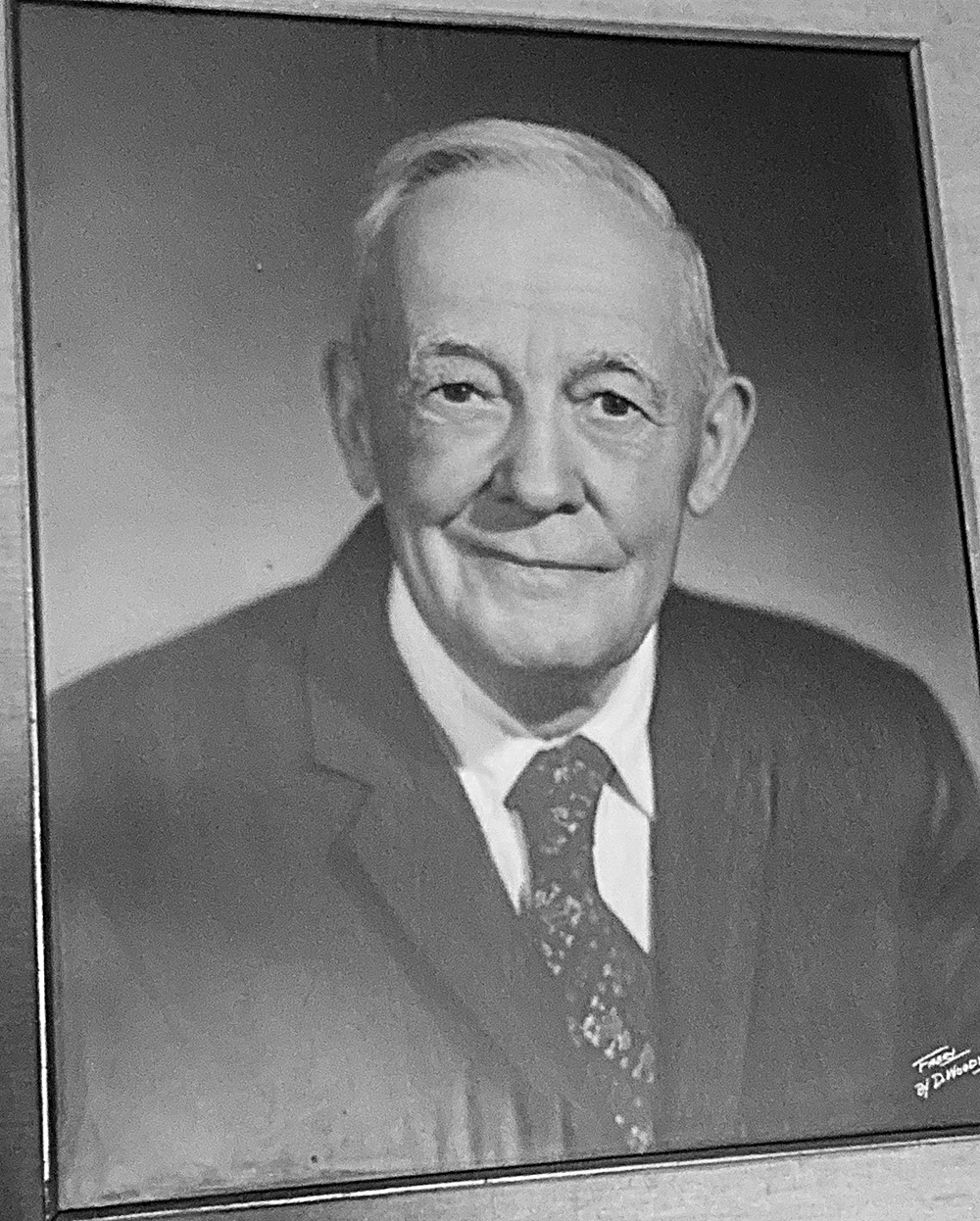
A portrait of Virginius Chase hangs in the herbarium at Forest Park Nature Center that houses specimens from his collection.
MIKE MILLER
After finishing school, Chase worked as a telegraph operator at the Wady Petra station and later as a shipping clerk for the Peoria and Pekin Union Railway. His dedication to the natural world never waned; he traveled throughout the United States and Mexico, expanding his herbarium and selling duplicate specimens to museums to fund his journeys. Chase was a founding member of The Peoria Academy of Science and served as its president starting in 1937. He built upon the work of earlier botanists like Frederick Brendell and F.E. McDonald, but unlike his predecessors, Chase took pride in being an “amateur, self-taught” scientist.
Later in life, Chase was asked why he never pursued formal education. He replied, with characteristic wit, that botany was taught incorrectly in schools. Rather than dissecting flowers and seeds, Chase believed students should get to know plants as old friends. He said, “If that were done instead of all of the dissecting and investigating, the student would find the trees nodding their greetings to them on every turn, they would see the ferns waving their friends in a stately bow, and the daisies and buttercups nodding in a demure curtsey. It would be better for the student and ultimately ensure the survival of nature.” This philosophy is at the heart of this modern rendition of “Nature Rambles” — to foster a deeper, more personal connection with the natural world.