
By KELLEA NELSON
As someone who spent their life dedicated to learning the intricacies of the English language, I often feel victimized by the sometimes-predatory nature of Artificial Intelligence.
I did not try Microsoft Copilot. I did not ask ChatGPT. And I will not let AI write an email for me.
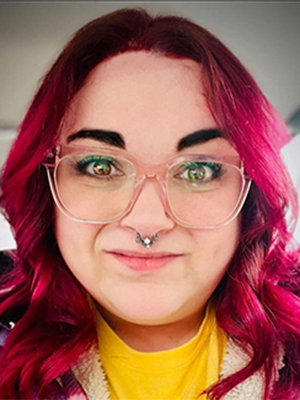
KELLEA NELSON
As we have been learning, AI is wasteful. It may not waste time, but it wastes resources. The data centers that are being used to train AI have been found to be destructive, using massive amounts of water for equipment-cooling purposes. These centers can use upwards of five million gallons of water per day, which is more than enough to sustain entire towns. The water being used is depleting natural resources and drinking water. These centers are also using an alarming rate of energy, which creates greenhouse gases that are contributing to climate change. These gases can also cause health problems like asthma and heart disease.
Using AI to create art is something I consider disingenuous. For example, the new fad of posting Facebook profile photos after asking ChatGPT to generate a photo of them based on a photo, their job, and their interests are flooding the internet. It is likely that previous art that you or someone you know made was used to create that picture posted on your timeline. When AI generates art for you, it is pulling from datasets of pre-existing photos and descriptions. What it is creating is not new, but a new version of something that already existed. Every time you use AI to create “art,” you are taking away from artists who put a lot of time and effort into creating something. This is a form of theft. If you want a true piece of art, which is only mimicked by these AI-generated photos, reach out to a local artist and commission something authentic. Instead, people flock to AI because stealing art is free and easy.
Better for worse
It seems to me that AI has made us lazier. Having more knowledge than ever has caused a shift in how students interact with the internet regarding their education. Students are now told that they cannot use ChatGPT. Teachers and professors are writing their syllabi differently, having to include things that you would think would be implied: Don’t use ChatGPT, use your own ideas, creativity, and words. From middle school to college and beyond, AI is changing education.
More from the CW: Data center debate hits area slate in Pekin
I spent a good portion of my life learning the beauty of reading and writing. I knew at an early age that I wanted to be a writer. I knew that I couldn’t go to college for something “more reasonable,” as many voices echoed when I was graduating high school.
There are benefits to reading and writing. It’s good for your own intelligence and health. It sharpens your mind by aiding in memory retention, reducing stress, and improving your emotional well-being. And, as I was told at the time, companies need someone who knows how to read and write — “Everyone needs to know how to write an email!” It is important to be able to articulate yourself. Using your own creative voice to amplify, clarify, and develop your ideas and share with others is an important skill. I wouldn’t trade my B.A. in English Writing for anything. I am thankful to have been able to extend my mind by learning logic and rhetoric while earning my degree.
I’m concerned with the current state of AI usage, specifically in the realm of education. Will using AI to summarize a book for a book report change learning and its benefits? Probably. Will using AI to help write an essay benefit students? Probably not. I assume that using Artificial Intelligence may do the opposite. By using AI like ChatGPT to do assignments, students are not using their own voice or creativity. It removes the exercise of your brain. AI in the education system could be impeding cognitive development and creativity. It limits the amount of human interaction between students and educators, which has been drastically altered since COVID-19. Students have more e-learning days since that possibility was discovered while using them during the pandemic. There are higher implementation costs for educators to use AI in the classroom and to ensure plagiarism and cheating do not come into play. Schools cannot afford these things. We all know public school systems have limited budgets.
Workforce
AI is also forcing its way into jobs. It’s being used to generate reports, do math, and create presentations. For most, this sounds fantastic. For me, it sounds tragic. Things like Microsoft Copilot are taking away from what I do at work every day. As a writer and communicator, I connect with others in the workplace without having — or wanting — to use AI. Most people assume that AI will do anything for them; however, I spend most of my days sending emails, generating reports, paying invoices, etc. One thing that AI cannot do is make these things personal. Using ChatGPT or Copilot for these tasks takes away a personal connection.
Staff come to me every day for assistance. This is one reason I will not be using AI to assist coworkers.
AI will always be around, whether we like it or not. I cannot see the future, but in the current state, I am unhappy with how and what it is doing to art, education, and the workplace. I want people to create art on their own, students to learn without ChatGPT interfering, and a workplace safe from Artificial Intelligence. I want to be able to feel like the work that I do is meaningful — without ChatGPT.
— Kellea Nelson is a previous Peoria resident who still works in Downtown Peoria. She received her degree in English from Eureka College