
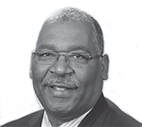
DANIEL MCCLOUD
My wife and I recently visited the city of Philadelphia. I was presenting at a conference, and she came along for support. The presentation went well, and we decided to do some sightseeing while we were there, so we took a tour trolley.
Despite the rain, we were able to see some of the more well-known tourist attractions, including the Philadelphia Museum of Art, where the Rocky statue stands (There are two other Rocky statues, by the way — at the Franklin Institute and the Reading Terminal Market). It should be noted that due to the government shutdown, several sites, including Independence Hall, the Liberty Bell Center, and the Benjamin Franklin Center, were closed.
However, we were able to see Mother Bethel African Methodist Episcopal Church, the oldest African Methodist Episcopal (A.M.E.) church in America, which was founded in 1793 by Richard Allen. The church would become the founding congregation of the A.M.E. denomination in 1816.
So, about halfway through the tour the trolley stopped at a red light, directly in front of a statue of an African American man. I looked at my wife and asked her, “Who is that?”
I was especially curious because, other than the A.M.E. church, there was little to see or speak of on the tour regarding African American contributions to the city of Philadelphia. So we wondered who the Black person was. As the light turned red, and the bus began to pull off, I heard the tour guide exclaim as the statue faded out of sight, “Oh, back there was Catto.” That was it, no explanation. Nothing.
My mind began to race. Catto … Didn’t Tupac mention a Catto in the song “So Many Tears?” I Googled the lyrics and in fact he did mentions a Kato, not Catto. The exact lyrics were, “Remember Kato,” an homage to his friend Kato who was killed in a drive-by shooting. The Catto immortalized as a statue in Philadelphia was Octavius Catto, who was an African American educator and civil rights activist.
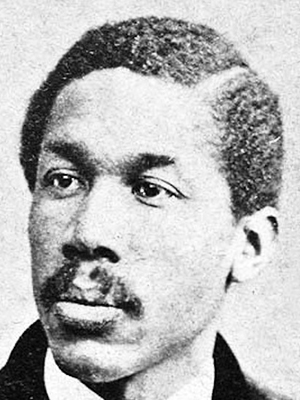
OCTAVIOUS CATTO
Octavious Valentine Catto was born a free man on Feb. 22, 1839, in Charlston, S.C. His father would later move to Baltimore, and ultimately Philadelphia. Catto would be educated in the segregated schools of Vaux Primary School and Lombard Grammar School. He later attended the Institute for Colored Youth, which later became Cheney State University, an Historically Black College. During the Civil War, Catto joined forces with Frederick Douglas to form a Recruitment Committee to enlist Black men to join the Union and the fight for emancipation.
Upon joining the Pennsylvania National Guard in 1863, he was soon promoted to Brigade Inspector General, with the rank of Major — the highest-ranking African American in the military at the time. In addition to his military service, Catto, along with others, helped to get legislation signed to allow Black ridership on the Philadelphia street cars. Catto also worked to help ratify the 13th, 14th and 15th Amendments, to ensure voting rites for the newly freed enslaved.
The point is, here was a man who was just as important to the city of Philadelphia as William Penn or Benjamin Franklin and he barely got a mention during the tour. It speaks to the fact that too often American history is whitewashed and one-sided. The story of Octavious Catto is no different than that of Katherine Martin, Mary Jackson, or Dorothy Vaugn. In case you are wondering, these are three African American women who were instrumental in advancing America’s space program during the early days of NASA by providing critical mathematical equations and calculations. Or in the case of Daniel Hale Williams, the first surgeon to perform a successful open-heart surgery in the United States, and Frederick McKinley Jones who invented the first portable refrigeration systems for trucks, which allowed for the transportation of food and medicine, and other perishables. His invention is said to have been critical during World War II in transporting supplies. These are but a few forgotten individuals.
Some say that the dark side of American history should be forgotten, that there’s no need to dwell on the past; and that the country has moved beyond those times. And while I certainly don’t agree on either count, what about the positive contributions of those individuals who not only persevered in the face of oppression, but thrived and contributed to a society that at every turn sought to prove that they were not wanted, expendable and non-existent.
Don’t we at least owe it to those individuals that their names be mentioned when speaking about what is perceived as the “good” of this country? Whether on a tour bus in Philadelphia or the classrooms and libraries of this country, should we all be made aware of them, and not just in passing or as an afterthought? Shouldn’t these many individuals who also make up the thread that ultimately is woven into the tapestry of American history, deserve that? I’ll answer that question: “Remember, Catto!”