Health care in America is on life support, and it seems like the United States government is nonchalantly pawing the plug that could pull affordable insurance away from millions of citizens.
Seems like politicians from both sides of the aisle should get together to craft a (gulp!) bipartisan bill to fix our system we love to call the best in the world, but really know is far from it.
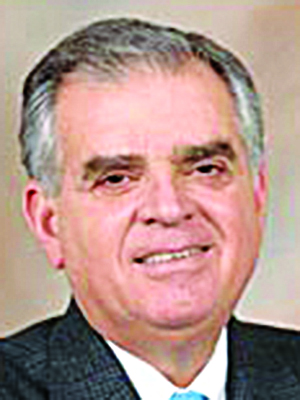
Ray LaHood
Ray LaHood knows a few things about reaching across party lines in Congress. He spoke Nov. 13 with fellow former U.S. Representatives Cheri Bustos and Bob Dold at “The Importance of Bipartisanship” for a face-to-face panel discussion at Bradley University in these social media times.
“The idea that you don’t have to look someone in the eye and make an argument really hurts bipartisanship,” said LaHood, a Republican, who after 14 years in Congress served as Transportation Secretary under Democratic President Barack Obama. The Peorian continued that politicians these days “say things we would never say to somebody.”
These are tense times
The latest — and longest — government shutdown pulled Obamacare off the backburner with Republicans claiming it provides free health care to undocumented immigrants, which they say unjustly raises rates for Americans. Democrats want health insurance premium tax subsidies renewed.
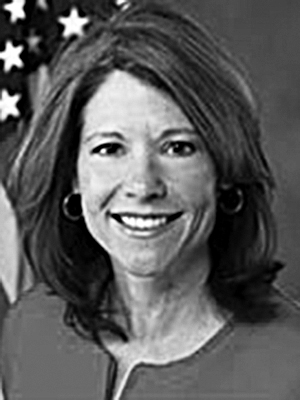
Cheri Bustos
Bustos called it “a waste of time” because “nobody comes out a winner,” but admitted, “If anything was good about the shutdown, it raised awareness of ACA subsidies.”
Dold added, “raise awareness that without those subsidies, it’s political suicide.”
Upon election, Obama reached across party lines to tackle our nation’s health-care system with the Patient Protection and Affordable Care Act — a first step to help reduce the national budget deficit (supposedly a GOP priority). Democrats borrowed the idea of an American’s “personal responsibility” to have health insurance from the ultra-conservative Heritage Foundation and coupled it with the successful implementation of a similar health-care system by Republican Governor Mitt Romney in Massachusetts.
But all of a sudden Republicans on Capitol Hill hated those ideas. Never mind Obamacare enabled children to stay on their parents’ plans until age 26. Never mind the new law protected patients with pre-existing conditions. Never mind it placed price controls on medical costs and eliminated yearly and lifetime caps on coverage. Never mind it expanded Medicaid to millions more Americans.
“It’s socialized medicine,” cried Republicans, who for some 15 years have tried to “repeal and replace” their nemesis Obamacare.
Back to the subsidies, which were put in place to actually keep the private sector involved — you know, capitalism — so insurance and pharmaceutical companies would not be blindsided by the new bill back in 2010.
“What people misunderstand about the ACA is that Democrats are not the only ones benefiting from it.” LaHood said. “This is not just for Democrats. It’s for the whole country.”
Obamacare was never meant to be the ultimate solution. It was supposed to be a framework for Congress to build upon. It’s flawed and it hasn’t been seriously looked at — much less improved — for more than a decade, which is unacceptable even if it was the ultimate health-care law.
The GOP makes a good point that premiums are rising (although supposedly at a lower rate had there been no Obamacare), and with the subsidies the whole thing seems like a big giveaway to the (now evil) insurance/pharmaceutical industries. But there are no counterproposals. No plan for when the ACA is removed “root and branch.” There are only “concepts” of a plan in Republican circles.
The reality is that the big bill President Trump signed into law this year does not renew the ACA subsidies and may also kick many millions of Americans off Medicaid by siphoning some $800 billion from one of the most effective government programs in U.S. history.
Time is now
The clock is ticking. No time for a conceptual phase. No time to claim canards about a righteous and just law from the 1980s that ensures anybody who needs care at hospital emergency rooms gets it — papers or not. Sounds American, eh? (But, but, that means we’re giving free health care to illegal aliens!!)
The politics is insane, especially when you realize that Obamacare continues to be one of the most-liked laws in American history. The ACA’s approval rating consistently polls at nearly 70 percent.
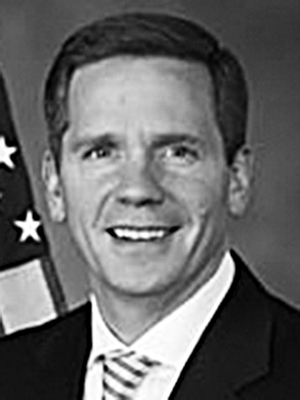
Bob Dold
“Republicans are looking at polling,” Dold said about his party mates. “The president’s own pollster says that this is a loser. If this is not fixed, I think there will be big political consequences.”
Politics
The panel on the top floor of the Alumni Center at BU — sponsored by the Dirksen Congressional Center with effervescent NPR broadcaster Bob Elving as facilitator — talked about the pros and cons of the filibuster and the evils of gerrymanding, which has drawn impenetrable lines between the parties and silences way too many a minority voice in districts that skew one way or the other.
All three speakers agreed politicians should not choose their voters. Voters should choose their politicians. Voters should draw lines, not politicians or commissions. Equal representation by the law. “The most bipartisan politicians are from those 50-50 districts,” said Bustos, who should know. The Democratic candidate was elected in 2012 to the 17th District seat, which encompassed parts of Peoria and swung 17 points from helping Obama win reelection to voting Trump four years later. Bustos won by 20 points in 2016. “I got more heat from the extreme left than I did from Republicans.”
Being in the mix can give politicians fits, but it’s good for democracy. They need to keep an open mind. Listen to constituents — majority and minority.
“If I’m getting heat from both sides, I’m probably doing something right,” said Dold, who was elected in the Illinois 10th twice (2011 and 2015).
Back to health care. The heat is on. Since the continuing resolution that reopened the government did not renew the ACA subsidies, millions will not be able to afford health insurance. The tax breaks are set to expire Dec. 31 and Senate Republicans promised Democrats to hold a vote on them soon. House Republicans will not say whether they will reciprocate, and there’s no telling what President Trump will do if a bill reaches his desk at the White House.
LaHood’s son, Darin, is a Congres-sional Republican in Peoria. His media advisor was in the house at BU, as well as a representative for Democratic Congressman Eric Sorensen. Both said their staffs listen to every call and read every message sent to their offices.
Should Obamacare subsidies be renewed? Do you have a problem with them? Obamacare is not controling costs of hospital services or drugs or insurance premium prices as was advertised. Any ideas?
There may not be enough time for legislators to devise health reforms from the latest concepts being bandied about before the next CR is due to be renewed in January.
But It’s not too late to speak out.
“Gotta get involved,” Ray LaHood concluded. “Don’t sit on the sidelines.”