
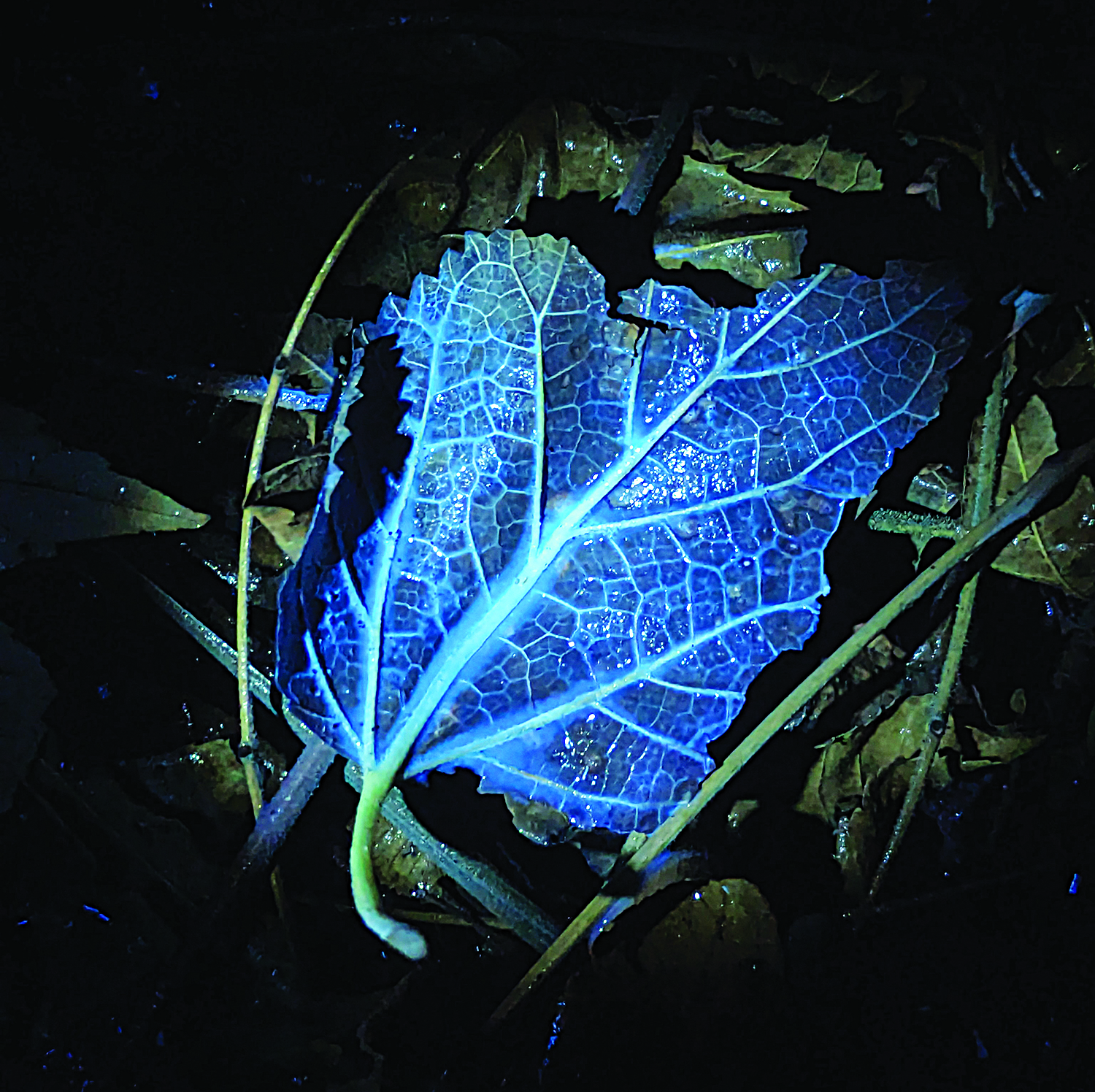
This 2025 digital photograph by Whitney Johnson-Lessard she calls ‘Untitled (UV)’ showcases her ability to create innovative artwork with ultra violet light. The artist relies on past wilderness adventures with her family and digital environments to influence her creativity.
WHITNEY JOHNSON-LESSARD

NICHOLE GRONVOLD ROLLER
Peoria-based artist Whitney Johnson-Lessard’s recent exhibition at the Contemporary Art Center of Peoria (CAC), “In a Warm Place by Now,” brought together two ongoing bodies of work that overlap across an eclectic range of topics, including apocalyptic stories, video games, and outdoor experiences.
Raised near a creek and wooded areas, Johnson-Lessard experienced nature as a normalized part of life. She shares that “my dad would take my brother and I on walks to look for morel (mushrooms). He’d show us what elm trees looked like and where they like to grow. My mom was often taking in injured or orphaned animals.”
Alongside these early wilderness adventures, digital environments influenced her creativity and she recalls that “in some ways, I got to imagine foraging and growing food from playing games like Harvest Moon for the Nintendo 64. That game is full of longing. I think the game without the access to the outdoors would have really been alienating.”
This merging of seemingly unrelated themes is central to Johnson-Lessard’s artwork. “Digital Backpack,” a series of paintings that resemble handmade paper, departs from the traditional process of making paper pulp. Instead of processing plant fibers, Johnson-Lessard shreds recycled fabric into tiny fragments and blends them into a slurry using a household blender.
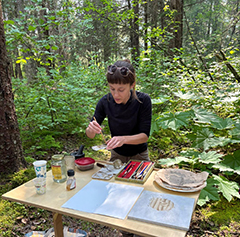
Whitney Johnson-Lessard’s natural mixtures make for innovative creations.
SUBMITTED PHOTO
Incorporated into the fiber pulp, she crafts a mixture of natural pigments by grinding industrial and domestic waste, such as eggshells and iron oxides, to produce raw pigments. Johnson-Lessard reveals that “the eggshells take a lot of effort to grind down.” She collects the iron oxide along railroad tracks where freight trains transport vast quantities of corn through Peoria. Watching these trains pass, she imagines Illinois before industrial agriculture, full of “wetlands and oak savannas, before destructive agricultural practices.”
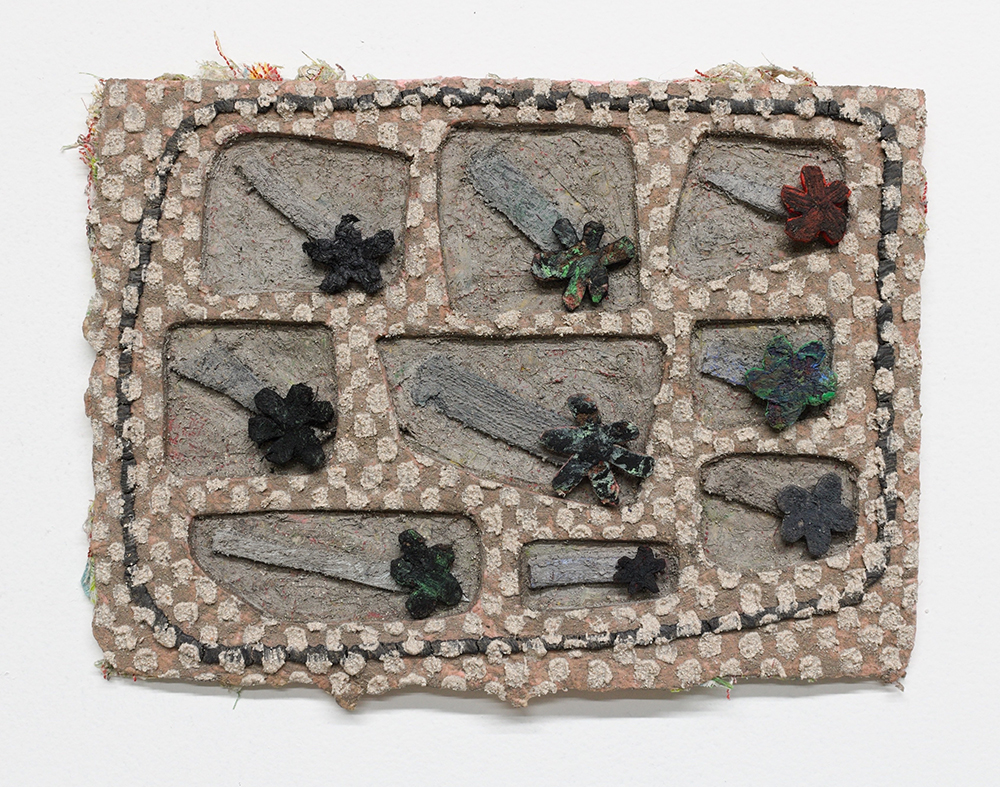
‘Flowers’ by Whitney Johnson-Lessard
In her ongoing project “To See Like You,” Johnson-Lessard reimagines the “more-than-human world” through ultraviolet and infrared light, asking whether one’s altered perception might cultivate “empathy and respect for the creatures and animals that we share this world with.” At the CAC, these questions came to life in an installation of eleven ultraviolet flashlights suspended from oak branches, arranged to appear like a ritual circle or gathering. Across from the installation, digital photographs of luminous plants extended the experience, creating a visual narrative between the grouped works.
During an artist talk at the CAC, Johnson-Lessard invited those who wanted to brave the cold to join on a night walk along the riverfront. Using ultraviolet flashlights similar to those in the hanging installation, guests watched as ordinary eggshells turned into a vibrant blood-orange. While the human eye cannot naturally perceive ultraviolet or infrared wavelengths, simple technology can reveal the beauty of nature’s often-overlooked magic.
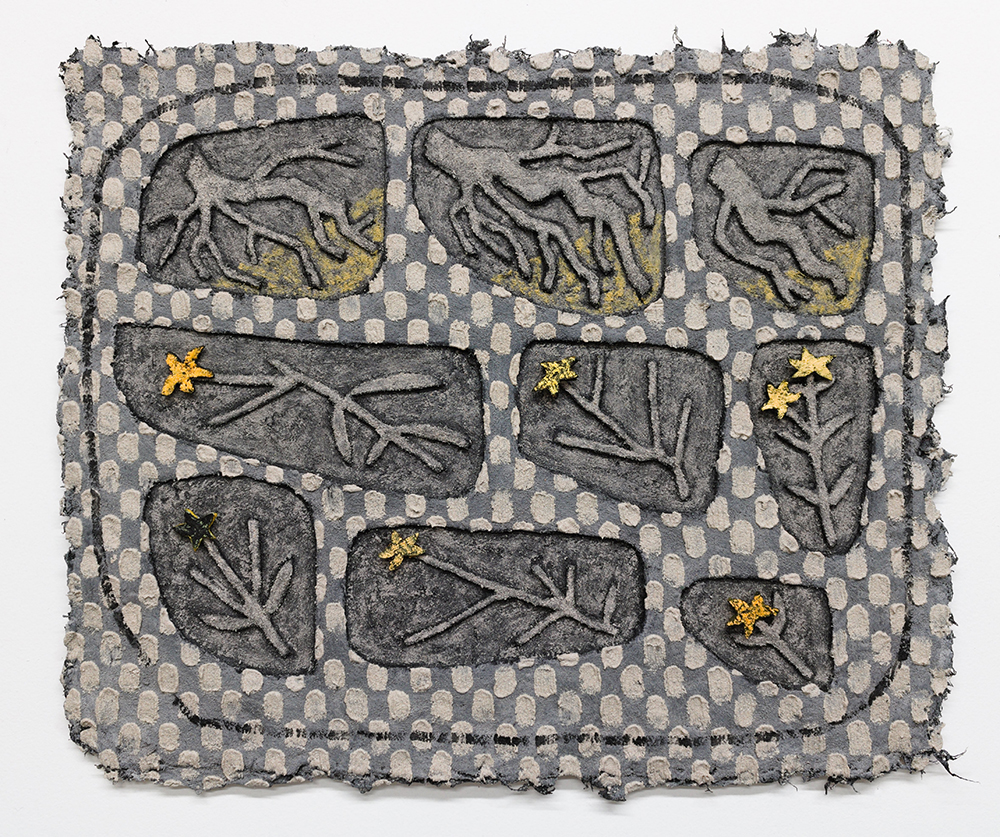
‘Valerian and St. John’s Wort’ by Whitney Johnson-Lessard
Across both projects, Johnson-Lessard transforms waste into images and an imagination that is enhanced — not dulled — by technology. Her materials are cyclical, biodegradable, and a response to our local environment.
The work invites viewers to reconsider how we see and relate to those with whom we share the planet. While the environmental history she references is subtle, it quietly responds to the work’s conceptual and visual language. As the artist explains, “it’s not explicitly referenced in the work, but it’s always there.”
For more information about the artist, visit https://www.whitneyjohnson-lessard.com/
For upcoming exhibitions at the Contemporary Art Center of Peoria, go to https://peoriacac.org/