
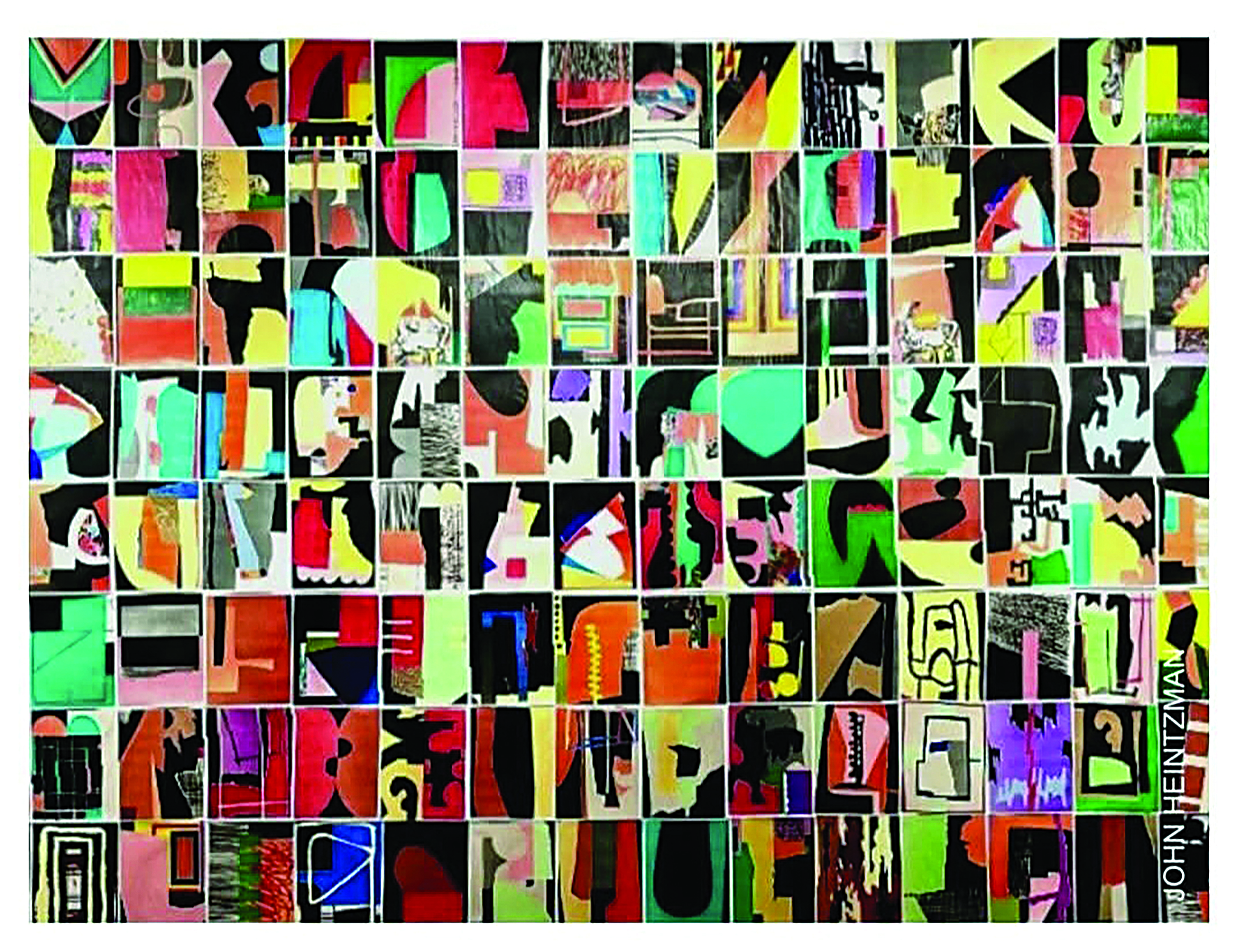
‘Untitled (Still Black Sketches)’ by John Heintzman.
SUBMITTED PHOTO
For centuries, the traditional art world asserted the importance of the narrative in art. The shift towards abstraction is one of the most important — and most radical — innovations of modern art. The question of who should get the credit for inventing abstract art is not easily identified.

JOHN HEINTZMAN
Most artwork prior to abstract art contained subtle representational forms. Picasso and Braque leaned on portraiture and still lifes as they developed Cubism. They engaged their audience by suggesting there was still an underlying narrative to be told.
Piet Mondrian explored abstraction during the 1910s. He wrote about his process of “abstraction” and created a series of works that, over decades, eventually rejected representation for complete abstraction and a singular focus on primary colors. A visit to his studio was an overwhelming moment for Alexander Calder, and forever impacted Calder’s palette.
Abstraction is created directly through the artist’s hand, often without any preparatory drawings but with an impassioned force and certain confidence. There is no single idea defining the artist’s act of creating as there is with the narrative. These artworks often can be constructed without hesitation — and immediately become an expression of a specific moment. They can be contradictory: full of energy or a sense of calm; charged with color or with monochromatic subtlety.
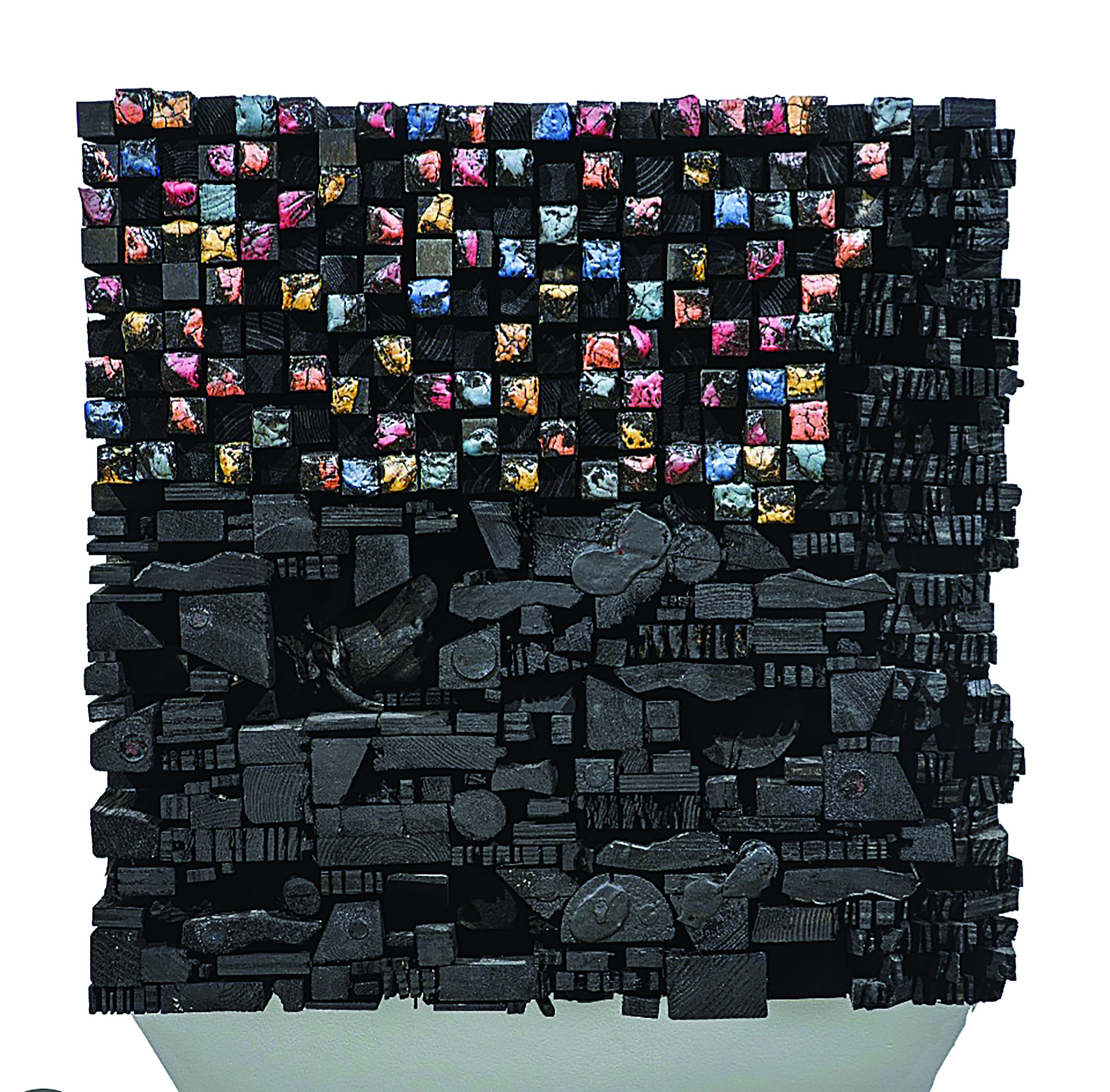
‘16C’ by Leonard Drew.
SUBMITTED PHOTO
By creating artworks from peripheral space rather than subject, the artist reduces meaning by preserving the source of emotions and reactions. The works closely hold perception with a sense of familiarity and a devotion to abstraction.
When one considers abstraction and its ubiquity in modern life, both sensory and conceptual approaches to abstract art rely on silence. The artist can manage introspection and the space that consumes the physical world quietly.
With abstraction there are risks taken and the artist’s hand becomes an effective tool of presentation. Typically, abstract art speaks through the objective aspects of appropriated materials. By eliminating subject matter — or rendering them unrecognizable — the artist strips away connotation but retains emotional elements.
As an artist, I am indecisive about whether my own artwork should be classified as collage or an installation. The word “abstract” becomes a dismissive voice. To embrace abstraction as a practice, the art endures because the images are accessible to everyone. Abstraction becomes an immediate form of visual poetry.
Artists, like Leonardo Drew, do the same — compulsively constructing texture and movement through their choice of materials. In the collection process, the artist employs a dedicated approach to extracting material from its source, excluding and retaining certain elements until the shapes and forms reveal a unique space.
By starting this way, Drew’s early works favored a format that Louise Nevelson asserted in her Monmouth installations. These forced a dominant grid-like construction which made one consider space and its relationship to abstraction. Drew places his attention to moments of both connection and juxtaposition between the building blocks of varied materials — and until there is an interdependence between viewer and the environment.
The process of building abstraction can be meditative, yet challenging. When the artist delves into a composition, it fulfills that sense of the sublime and becomes a prescription that resolves the recognition of both materiality and pure abstraction. Abstraction becomes an act of discipline where an individual commits to resolving an idea to that moment. It becomes art.
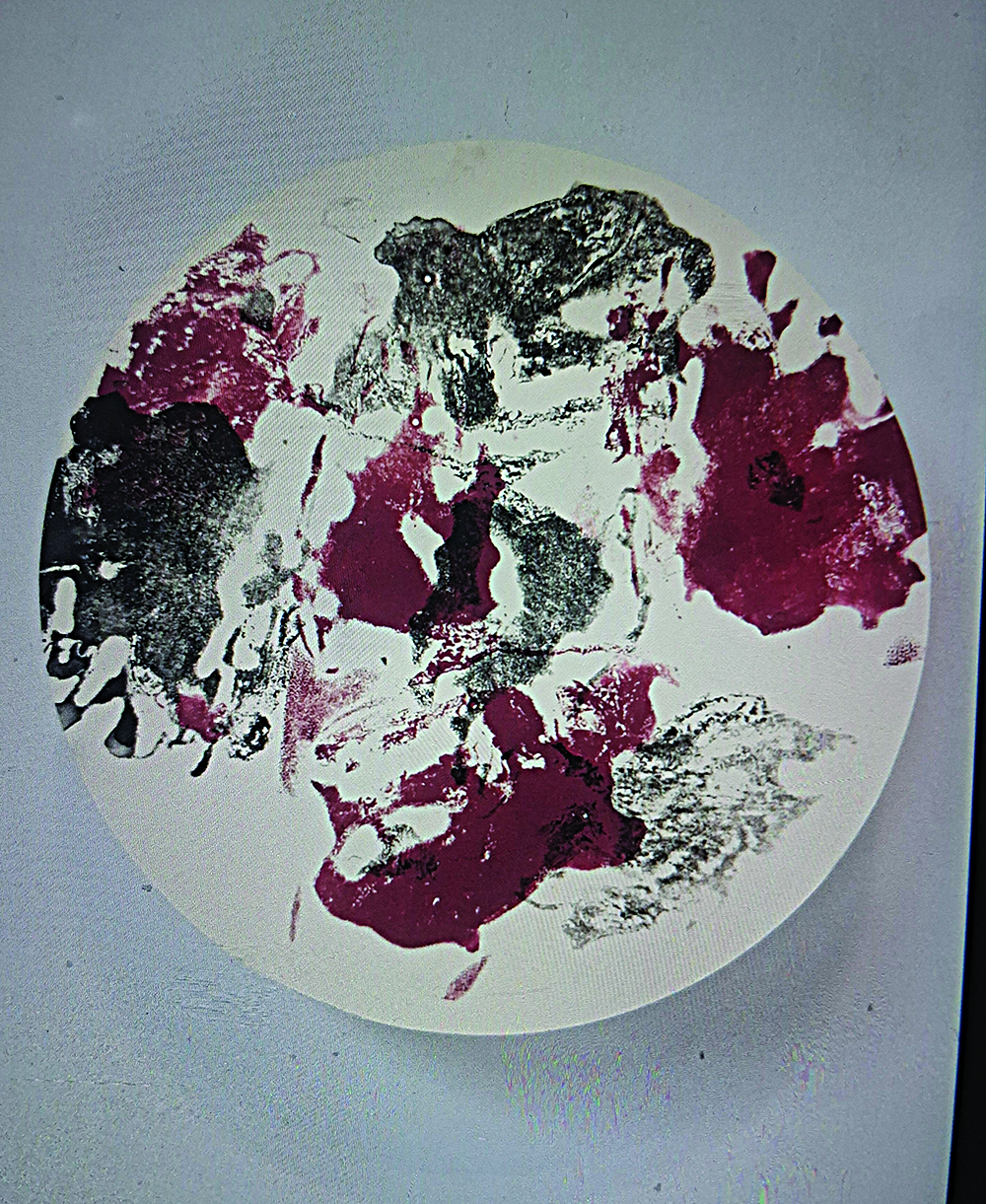
A unique piece by Bill Conger illustrates abstract art. The shift towards abstraction is one of the most important — and radical — innovations of modern art.
SUBMITTED PHOTO
Artist Bill Conger employs this act of building his matrix with abandoned notion. His mark-making is thoughtful, but impulsive, intense yet yielding to happenstance. This takes hold of the viewer’s curiosity to define abstraction and to question, “What just happened?”
Clark Valentine’s meditative and repetitive motion composes a series of lines that set boundaries for his typically singular forms. Zen-like marks parallel to one another bring the viewer into a state of contemplation much like Agnes Martin. Abstraction is realized as a personal space only to be shared with the viewer.
Abstract art departs from the traditional by allowing for a personal, interpretative experience where the artwork’s value and meaning become owned by the viewer. It is about freedom of expression, unconstrained and, at times, exhilarating.