
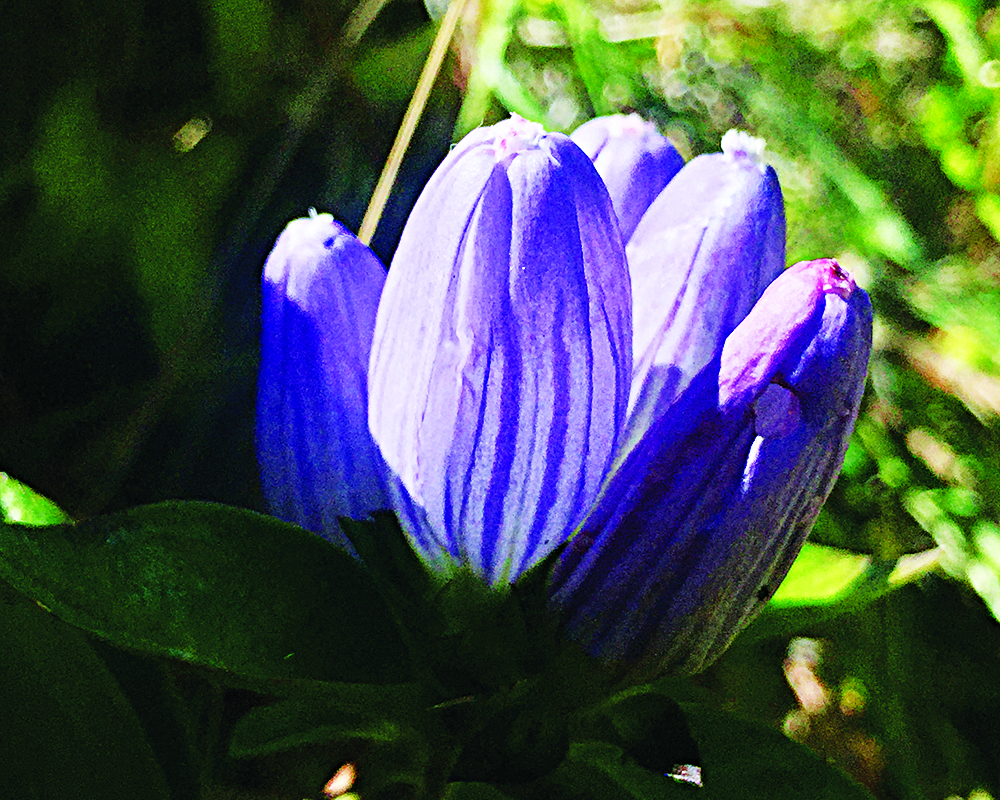
Bottle Gentian at Sue and Wess Dixon Waterfowl Refuge.
MIKE MILLER
October brings a blaze of color, but its beauty is more than a final display. Nature spends the growing season preparing this last flourish: trees release their cloaks of green, wildflowers brighten the prairie, and insects hurry through one more season of work before winter settles in.

MIKE MILLER
October also brings some of the most vivid wildflowers into bloom. The sunflowers of summer are spent, but goldenrods take over the duty of bringing yellows to the prairie. Their golden glow takes on the hue of sunrise and sunset — the golden hour in flower form. Asters carry blues into autumn with gusto, and New England Aster can shine with a brilliance that rivals the autumn sky. Both asters and goldenrods are perfectly timed to provide nectar and pollen to late-season insects. The frenzied fall activity raises an old question: Are the insects here because of the flowers, or are the flowers here because of the insects?
While asters and goldenrods dominate the fall prairie in volume, there are other gems worth searching out. One group of late bloomers is known as the gentians. They are found only in places where the plow has not turned the prairie earth. Their seeds are tiny, almost like dust, and their survival depends on special bacteria or soil fungi that help nurse the seeds to adulthood. Alter the soil, and gentians cannot grow. When you look at a gentian, you know you are standing on ancient ground.
The hill prairies of central Illinois are home to one of our most vividly colored gentians, the Prairie Gentian (Gentiana puberulenta). Its color is like the blue of an October sky fallen to earth and distilled into a hue that only imagination could create. This plant prefers dry soils and has found refuge locally in the ancient hill prairie remnants along the bluffs of the Illinois River. It is pollinated by several late-season bees. While most gentians have flower structures that remain closed, Prairie Gentian opens fully and shamelessly entices insects.
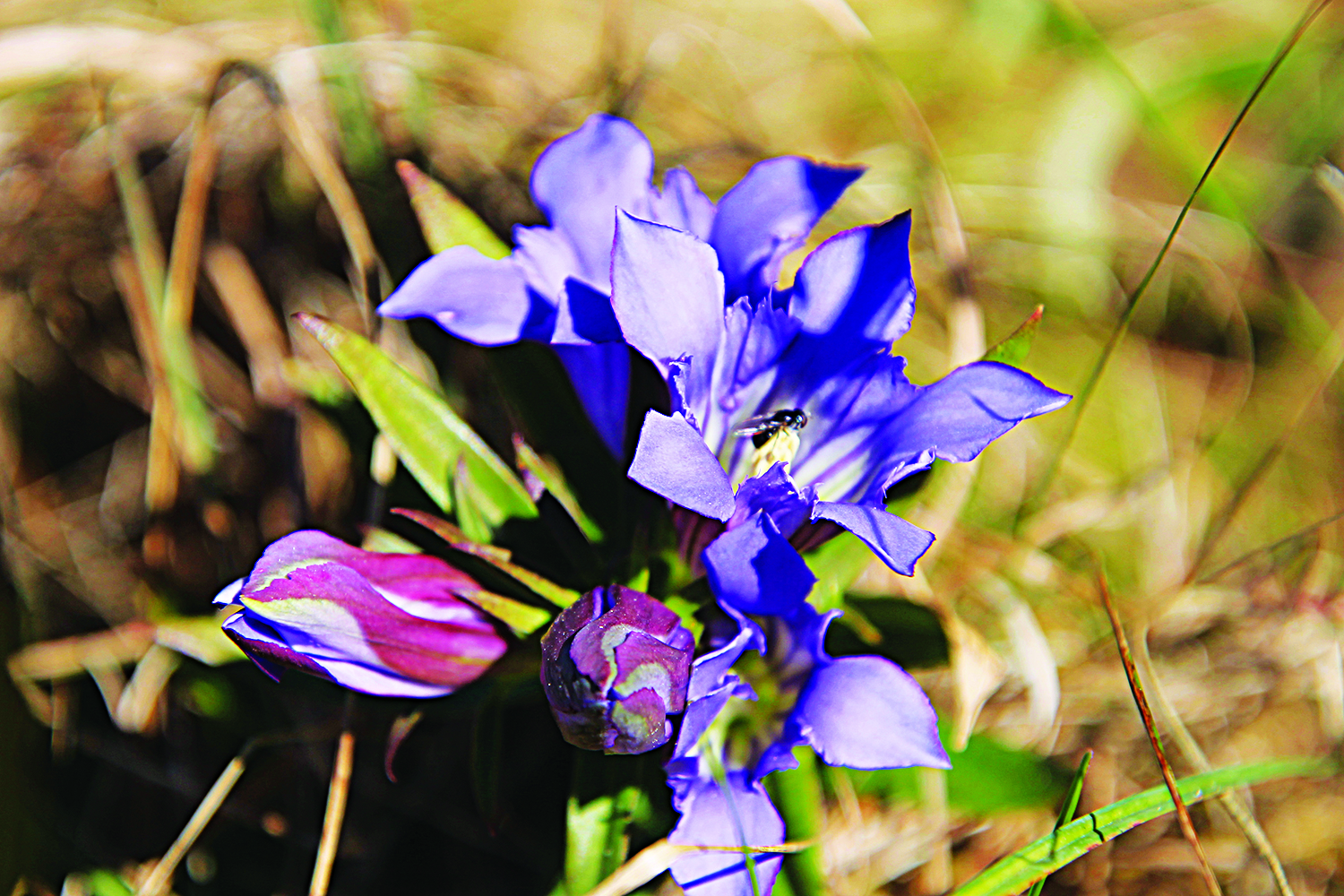
Prairie Gentian blooms at Oak Bluff Savanna Nature Preserve in Marshall County.
MIKE MILLER
In the moister soils of mesic black-soil prairies, one can find the Bottle Gentian (Gentiana andrewsii). As its name implies, this gentian is more reserved. Its flowers remain closed, or “bottled up.” Only a few bumble bees are strong enough to open the flowers and reach the nectar inside. Seeing a bumble bee wallow within the sky-blue flower bottle is a testament to the specialized relationship between insect and plant. Is the flower shaped this way because of the insect, or is the insect here because of the flower?
The fall prairie is full of beauty and unanswered questions. It is worth wandering into the receding edge of the growing season, where curiosity can gather enough warmth and wonder to carry us through the long winter. As the natural world moves quickly toward dormancy, the last flurry of activity between flower and insect is good medicine for the soul.